
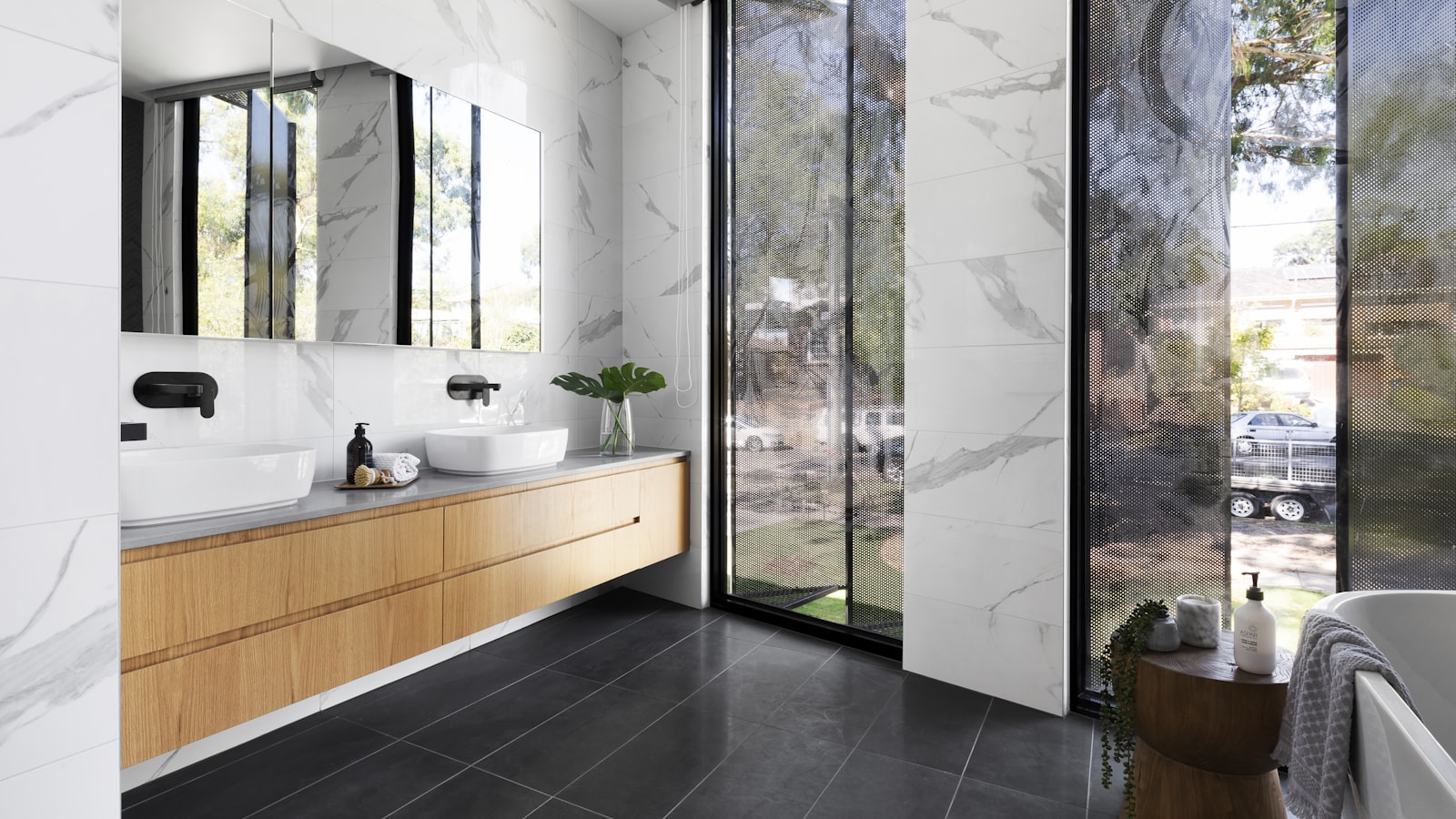
The single most common question we get on a first walkthrough is some version of "so how long will this take." It is a fair question, and it deserves a real answer instead of a number picked to make you feel good. A full primary bathroom remodel done right runs roughly three to five weeks of active work. That range moves around based on material lead times, how inspections land, and what we find once the walls are open. Here is what actually happens, in order, and where the honest waiting points sit.
The Sequence
The Order of a Real Remodel
Before we get into weeks, it helps to see the whole sequence at once. A bathroom is a stack of trades that have to happen in a specific order, and skipping ahead almost always means tearing something out later. This is the path nearly every project follows:
- Planning and material ordering, before a single tile comes off the wall.
- Demolition, taking the old bathroom down to studs and subfloor.
- Rough-in, the plumbing and electrical work inside the walls, with inspections.
- Waterproofing and backer board, the part nobody sees that decides whether the tile lasts.
- Tile, which needs real time to set and cure before the next trade touches it.
- Vanity, fixtures, glass, and paint, the finish work that makes it feel done.
- The punch list, the small final items we walk with you before we call it complete.
Each of those is its own chunk of the calendar. Let us walk through them.
Before Demo
Planning and Ordering Come First
The clock on a good remodel starts weeks before demo. Tile, vanities, custom glass, specialty faucets, and anything with a finish you actually chose on purpose all have lead times. Some items ship in days. A custom vanity or a frameless glass enclosure cut to your opening can take two to four weeks or more. If we start demo before those materials are in hand, you end up with a torn-out bathroom sitting idle while we wait on a box from a warehouse. That is the worst kind of delay, because you are living without a bathroom the whole time.
So we order early and confirm everything has landed before we swing a hammer. This planning stretch does not usually count against your "active work" weeks, but it is real time, and it is the single biggest reason two identical bathrooms can finish weeks apart. The homeowner who picked finishes quickly and let us order ahead almost always beats the one still deciding on tile in week two.
Pick your tile, vanity, and glass before demo day, not during. The trades move fast once the wall is open, and the fastest way to stall a job is a finish decision that is still up in the air when the installer is standing there ready to work.
The First Weeks
Demo Through Rough-In
Once materials are staged, the visible work begins. Demolition on a standard primary bath is quick, usually one to three days to take it down to studs and subfloor and haul the debris out. It is loud and dusty and it is over fast.
Rough-in is where the real skill hides. This is the plumbing and electrical inside the walls, the part you will never see once tile goes up but the part that determines whether your shower drains right and your outlets are safe. Moving a drain, relocating a valve, or adding a circuit for better lighting all happen now. Plan on several days to a week here, and this is where the first honest waiting point shows up. Most of this work has to pass a rough-in inspection before we can close the walls, and we do not control the inspector's schedule. A good crew calls the inspection in early and keeps other tasks moving, but a day or two of waiting on the county is normal and worth doing right.
The parts you never see, the waterproofing and the rough-in, are the parts that decide whether the parts you do see last ten years or start leaking in two.
The Cure Time
Waterproofing, Backer, and Tile
With the guts inspected and the walls closed, we install backer board and waterproofing. This is the layer that protects your home from the water a shower throws at it every single day. Done cheaply, it is where failures come from. Done right, it is invisible and permanent. It is not a place to rush.
Then comes tile, and tile is the phase that most surprises homeowners on timing. The setting itself takes a few days depending on the size of the space and the pattern. The waiting is the part people forget. Thinset, the mortar under the tile, needs time to cure before we can grout over it. Grout then needs its own time to cure before the shower can get wet or sealer goes on. We are talking a real day or more of drying that simply cannot be sped up by working harder. Pushing tile before it has cured is how you get cracked grout and loose tile a year later, so we build that drying time into the schedule on purpose. Plan on a week or so for tile and its cure combined on a typical bath.
The Finish
Fixtures, Glass, and the Punch List
Now it starts to look like a bathroom. The vanity goes in, the toilet and faucets and shower trim get set, lighting and mirrors hang, and paint goes on. This finish week is satisfying and moves quickly, with one common exception: custom glass. A frameless shower enclosure usually cannot be measured until the tile is set and cured, because the glass is cut to your actual finished opening, not a drawing. Once measured, it is often a week or more at the fabricator. That is the second honest waiting point, and it is why a shower can look ninety percent done while you wait on one final piece of glass.
The last step is the punch list. We walk the finished bathroom together and note every small thing, a caulk line to touch up, a hinge to adjust, a spot of paint. Then we knock it out. A remodel is not done when it looks done. It is done when the punch list is empty and you have signed off.
The Buffer
Why the Buffer Is There
Add it up and a typical full primary bath is roughly three to five weeks of active work. It stretches for reasons that are usually outside anyone's control: a long lead time on a vanity or glass, an inspector's calendar, or a surprise behind the wall like old galvanized pipe, hidden water damage, or framing that was never square to begin with. Those surprises are real, and on an older Triangle home they are common enough that a contractor who promises you a hard date with no cushion is either new or not being straight with you.
That is why we build buffer into every schedule and tell you where it is. We would rather give you an honest range and beat it than a tight number we have to walk back. If you want to talk through the timeline for your specific bathroom, or see how we work, take a look at our services or contact us and we will walk your space and give you a real one.