
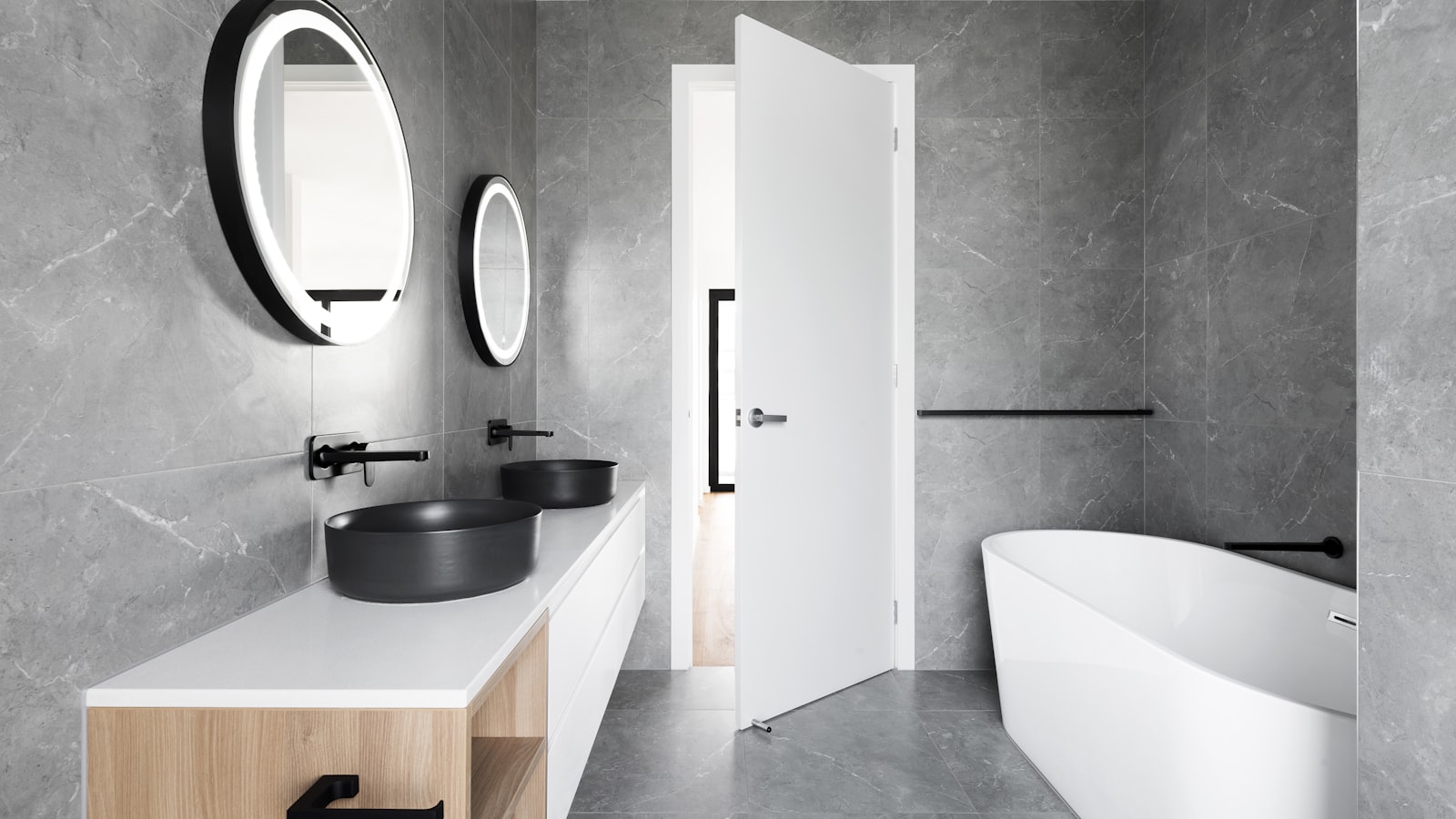
A bathroom is the hardest working room in your house, and it is also the wettest. So when a homeowner asks us which tile they should pick, the honest answer is that the tile is only part of the story. The sample matters, but what sits behind it, the grout in the joints, and how well the material fits the way your family lives will decide whether the room still looks good in ten years or shows its age in two.
We build bathrooms all over the Triangle, and these questions come up on every project. Here is how we think through them, in the same plain terms we would use standing in your bathroom.
The Materials
Porcelain, Ceramic, and Natural Stone
Most bathroom tile falls into one of three buckets, and each has a real place. The trick is matching the material to the wear it takes.
- Porcelain is our default for floors and wet areas. It is fired hotter and denser than ceramic, so it absorbs very little water and shrugs off wear. Look for a PEI rating of 4 or 5 on any floor tile and a water absorption number under 0.5 percent. Through-body porcelain also hides chips better, because the color runs deeper than the surface glaze.
- Ceramic is softer, more porous, and usually cheaper. It is fine on walls and shower surrounds where it takes no foot traffic, and it often comes in shapes and colors porcelain does not. We just do not put it on a floor a family uses every day.
- Natural stone such as marble, travertine, and slate is beautiful and the highest maintenance of the three. Stone is porous, it can etch when it meets anything acidic, and it needs sealing on a schedule for the life of the room. If you love the look we will build it right, but go in knowing it is a material you tend to.
Cost climbs from ceramic to porcelain to stone, but price is a poor way to shop. A well chosen porcelain that mimics stone often outlasts the real thing in a busy bathroom, for less money and less upkeep.
Behind the Tile
The Tile Is Only as Good as What Is Behind It
This is the part homeowners never see and contractors cut corners on most, so it is the part we care about most. Tile does not waterproof a shower. The system behind it does, and water finds every weakness.
In a shower or tub surround, greenboard or regular drywall behind tile is a failure waiting to happen. We use cement backer board or a foam waterproofing board, and we treat the joints, corners, and penetrations with a proper membrane before a single tile goes up. On floors we want a flat, solid substrate, because a subfloor that flexes will crack grout and pop tile no matter how good the tile is.
None of this shows up in a photo of a finished bathroom, which is exactly where the cheapest bids save money. Those are the bathrooms we get called to tear out and redo a few years later.
Before we tile a shower, we plug the drain and flood the pan, then let it sit overnight and check the level in the morning. A lot of crews skip this. Finding a leak while it is still an empty pan costs an afternoon. Finding it after the tile and glass are in costs a demolition.
The Joints
Grout and Sealing
Grout is the thin line most people ignore until it turns dingy, and you have two real choices. Cement based grout is the standard: affordable and easy to work with, but porous, so it stains, holds moisture, and needs sealing to hold up in a wet area. Epoxy grout costs more and is harder to install well, but it is essentially waterproof and stain resistant, which makes it a strong choice for shower floors and any joint that stays wet. We often mix the two on one project, putting epoxy where the water lives and cement grout where it does not.
Grout color is a decision people rush and later regret. A bright white grout against a dark tile looks crisp on day one and shows every speck of soap and mildew by month six. Picking a grout that lives a shade or two into the tile color hides the daily reality of a bathroom. And if you use a cement grout, seal it, then reseal it every year or two. It is fifteen minutes of work that pays for itself.
The finish that looks the most perfect in the showroom is often the one that looks the worst in a real bathroom a month later. We would rather show you what wears well than what photographs well.
The Finish
Finishes That Hide Water Spots and Wear
The finish of a tile or fixture changes how much daily upkeep the room demands. A high gloss, dark, smooth tile is stunning and unforgiving, because it broadcasts every water spot and streak, and much of the Triangle has hard water that leaves its mark.
A matte or honed finish, a slight texture, and a mid tone color all work in your favor day to day. The same logic applies to fixtures and glass. Brushed and satin finishes on faucets hide water spots far better than polished chrome, and a coated shower glass sheds water instead of collecting the cloudy film plain glass builds up. This is not about giving up a look you love. It is about choosing the version that stays looking good with the cleaning time a real family has.
Where It Counts
Where to Spend and Where to Save
You do not need to buy the most expensive everything, and honestly we would talk you out of it. The money that matters is the money you cannot see. Here is how we steer a budget.
- Spend on the waterproofing system, the shower pan, a quality porcelain floor, and the plumbing valves inside the wall. These fail expensively and are miserable to fix later.
- Save on wall tile in dry areas, decorative accent tile used sparingly, and trend driven pieces you may want to change in a few years anyway.
- Do not cheap out on labor and the substrate. A mid priced tile installed well will outlive a premium tile installed poorly, every time.
Put the dollars behind the walls and under the floor, and let a clean, well installed tile carry the look.
Real Life Fit
Match the Material to How the Room Gets Used
The best material for a room depends on who uses it and how hard.
A kids' bath or a busy hall bath wants durable porcelain floors, epoxy grout where it counts, a slip resistant texture underfoot, and forgiving mid tone colors that do not show every drip. Save the delicate finishes for a room that does not see wet towels and toys in the tub. A primary suite you use quietly can carry more of the materials you love, including natural stone, as long as you are clear eyed about the care it asks for. A lightly used guest bath is the safest place to take a design risk.
None of this is complicated once you frame it around real life instead of a showroom. Pick the material for the wear it will take, build the system behind it right, choose a grout and finish that forgive a normal week, and put your money where it protects the room. Do that, and it still looks new long after the trend that inspired it has passed.
If you are weighing materials for a bathroom in Raleigh, Durham, Cary, or Chapel Hill and want a straight answer about what will hold up in your house, we are happy to help. See our services or contact us.